Keren Restaurant

Keren Restaurant, 1780 Florida Avenue NW, Washington, DC (near 18th and U Streets NW), 202-265-5764 (Metro Trip Planner – opens in new window) [Google | AllMenus | City Paper | Yelp]

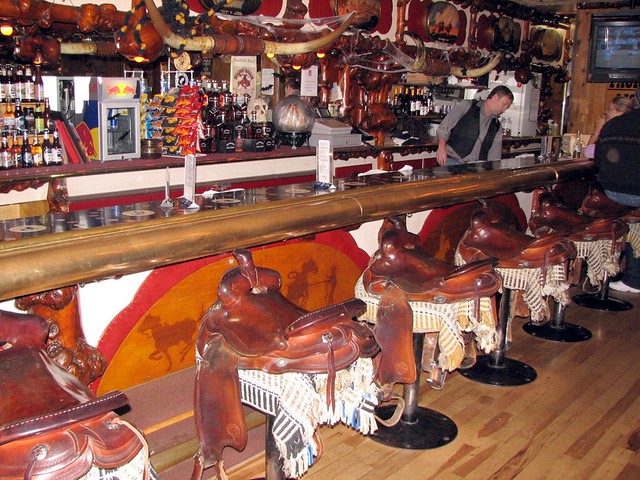
Eritrea 2011, by thecomeupshow

Eritrea 2011, by thecomeupshow

This place is exactly what more ethnic restaurants in DC should be like. Eritrean food will remind you of Ethiopian, but it isn’t the same either. There is more bread mixed into the dishes for one thing, and the cuisine is overall less Americanized. The vegetables are less smoothed over. What you want to get here is the listed “Five Eritrean dishes” listed on the bottom of the menu, otherwise not further specified. Also get one or two of the “Fuls,” which are available for breakfast too. The Egg Ful is especially tasty. The wheat dishes are original.

Everything here is quite good, and the staff and proprietor are quite charming. A strong restaurant on all dimensions and also extremely cheap. By the way, maybe you knew the “old Keren,” but the place is under new management circa 2012 and is much improved.

Related Posts:

Posted in African, Current Favorites, DC, Eritrean, Ethiopian, U Street / Shaw | Tagged , , , , | 1 Comment

Food Rules!

So how did American food fall to the depths of 1960? In Cowen’s view, it wasn’t the doing of greedy agribusiness in league with the Mad Men. Three great tsunamis wrecked the American palate: Prohibition, the Emergency Quota Act of 1921, and the rise of TV and the empire of children. When I first arrived at Michigan State University back in 1971, I noticed that the faculty club was far from campus—in fact, just outside the city limit. Why? Because East Lansing, where beer pong now reigns on weekends, was dry until 1968 (that’s four years after the Beatles invaded). Even today, we learn from Cowen, about 18 million Americans live in dry communities in states like Kentucky, Arkansas, and Texas. The Eighteenth Amendment put good restaurants out of business or drove them into the grip of gangsters and corrupt officials, and opened the legitimate restaurants that remained to children and their childish tastes. The Great Depression and the Second World War then extended the culinary hangover for another 20 years after Prohibition’s repeal in 1930.

Far less than Europeans and Asians, American parents “parent,” which means, Cowen says, giving in to their kids’ whims and demands. Kids like to eat things that are soft, smooth, and sweet: hence the ubiquitous Big Mac. So it wasn’t the producers (i.e., agribusiness) that ruined American food. Cowen concedes that TV advertising made it possible for them to appeal profitably to mass audiences and thus mass taste. But the producers didn’t create that taste, which was long in the making from the effects of public policy and social forces. Along with producing an abundance that wiped out hunger and malnutrition in the United States and elsewhere (our problem today is obesity, not starvation), the producers catered to an America that knew almost nothing about the wonders of good food.

Food Rules!” by Jerry Weinberger, City Journal, May 18, 2012 (review of An Economist Gets Lunch: New Rules for Everyday Foodies, by Tyler Cowen.)

Related Posts:

Posted in An Economist Gets Lunch, Books | Tagged , , , , | Comments Off on Food Rules!

Scaling the Great Wall

Great Wall Supermarket, web site, 2982 Gallows Road, Falls Church, VA, 703-208-3320 (Metro Trip Planner – opens in new window) [Patch | Yahoo Local | Yelp]

Here is my essay from Washingtonian magazine, adapted from An Economist Gets Lunch, about what it is like to shop at a Chinese supermarket for a month. Here is one bit about search theory:

Then there’s getting your cart down the aisle. The main aisles fit two carts side by side, barely. It’s hard to get down the aisles, and that discourages browsing. My initial tendency was to search the empty aisles, if only because I knew I could get down them without much delay. This obviously isn’t the best strategy, and it led me to spend too much time looking at the highly durable items, which are purchased less frequently by other customers. Overall, I felt far less mobile than in an American supermarket. I started going later at night and avoiding the weekends to circumvent these problems.

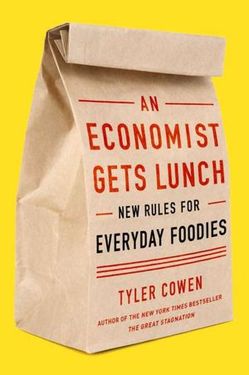
An Economist Gets Lunch: New Rules for Everyday Foodies

It’s common to see a Great Wall customer spending a solid minute or two inspecting the quality of a pineapple, thereby blocking that portion of the aisle. The customers who seek green peas go through the bin pea by pea. One woman became entranced picking out the best garlic chives, and a man asked for sales help in selecting the best clams–by what standard he judged them I’m not sure. No one was much enamored of the scooping technique for filling a plastic bag.

Originally posted on Marginal Revolution – click to see comments and suggestions.

Asian Imports–That Other Asian Supermarket,” by Jimmy Scarano, Falls Church Times, March 19, 2010
Great Wall Grocery managers face charges over live animals,” by Stephen Tschida, ABC7, March 27, 2012

Related Posts:

Posted in An Economist Gets Lunch, Books, Fairfax, Food Stores, Virginia | Tagged , , , , | Comments Off on Scaling the Great Wall

The Independent on “An Economist Gets Lunch”

The review is here, by Will Dean, the summary is here:

If you’re interested in how the food and restaurant industries work – and how to exploit those factors for your own good – then Cowen’s work is indispensable.

An Economist Gets Lunch: New Rules for Everyday Foodies

And:

All good advice. It has no recipes, few restaurant recommendations and no famous chef names, but An Economist Gets Lunch might be the most interesting book about food you read all year.

originally posted on Marginal Revolution – click to see comments and suggestions.
Related Posts:

Posted in An Economist Gets Lunch, Books | Tagged , | Comments Off on The Independent on “An Economist Gets Lunch”

Is Africa the next big food trend?

Josh Schonwald says yes:

One night, after reading about sugar-cane drinks and fresh lobster skewers, I started cooking. I made a spicy okra salad, grilled shrimp piri piri and steamed vanilla pudding. The next night, Zanzibari pizzas–chapati stuffed with eggs, meat and spices. Later, I had a Mozambican seafood stew with Senegalese-style jollof rice. I started seeing it.

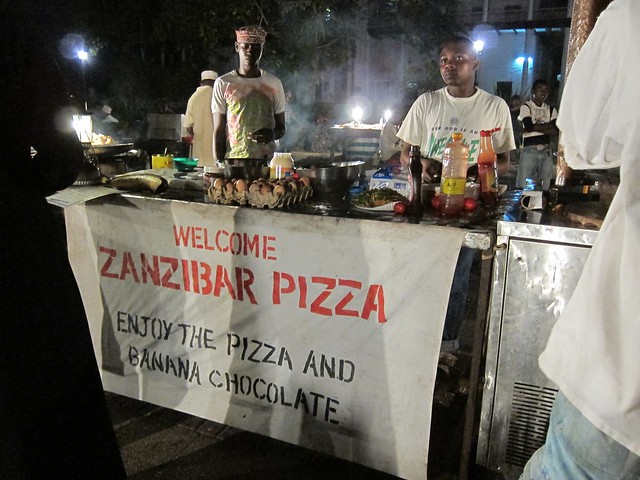
Zanzibar Pizza at Forodhani Gardens, by fabulousfabs

Zanzibar Pizza at Forodhani Gardens, by fabulousfabs

As fast-growing African nations become more prosperous, they will develop something that is rare right now–a middle class with disposable time and income. Poverty, hunger, war and sickness are why Africans–from Cameroon to Mozambique to Namibia to Congo—have been unable to develop a baobab-infused vinaigrette.

I very much enjoyed Josh’s new food book The Taste of Tomorrow: Dispatches from the Future of Food, and I can recommend it for its pro-science stance, its interesting speculations, and its excellent reporting. My prediction, by the way, based on demographics, is that the next big food trend will be more from the Latino cuisines, fused with American ideas to appeal to the (North) American palate. Chipotle is but one step in this direction. Sadly, in my view most Americans have room for only a few foreign cuisines in their lives. Thai and Indian are knocking on the door of Mexican and Chinese (all in their American versions), but I do not see new contenders for that throne.

Originally posted on Marginal Revolution – click to see comments and suggestions.
Related Posts:

Posted in African, Books, Chinese, Indian, Mexican, Thai | Tagged , , , | 1 Comment

“The Washington Post” covers “An Economist Gets Lunch”

Cowen fears the effects of gentrification, which tends to drive up real estate rates and drive out ethnic restaurants. It can also lead to blander food. But if defense funding is cut, and the impact is felt locally, that would be a good thing for ethnic restaurants, if not for the populace in general, Cowen said.

An Economist Gets Lunch: New Rules for Everyday Foodies

And finally, some more helpful tips for ethnic restaurant exploration: “It’s all about the ordering,” Cowen said. The best places have smaller menus, so they aren’t trying to please everyone, and likely do several things very well. Don’t ask the waiter what’s good, “that will only confuse them.” Instead, ask, “What dish do you have here which is special?” or “What are your regional specialties.”

That is from Tom Jackman, here is more. Also from the Post today, Tim Carman adds further discussion.

originally posted on Marginal Revolution – click to see comments and suggestions.

The best food choices in NoVa these days, Cowen said, are the Bolivian food in Arlington and Falls Church; the Ethio­pian along George Mason Drive in Baileys; the Korean food in Annandale; and the Vietnamese food at the Eden Center in Falls Church.

Bang Ga Nae

Related Posts:

Posted in An Economist Gets Lunch, Books | Tagged , , , | Comments Off on “The Washington Post” covers “An Economist Gets Lunch”

“Don’t hate the haute”

Don’t go into a restaurant with many beautiful women in it, says economist Tyler Cowen. Those places attract a lot of men, and although they may be popular for a few months the quality inevitably will soon diminish.

Don’t go into restaurants in city centers, Mr. Cowen says. Their rents are high, so they have to make money on a high volume of business, which leads to problems with food and service.

Don’t go into restaurants where people are smiling, he says. That indicates they are there to socialize, and are not truly serious about food.

An Economist Gets Lunch: New Rules for Everyday Foodies

Mr. Cowen is not the first person to formulate this theory, of course. Calvin Trillin memorably wrote that when he goes to a new town, he doesn’t want to go to the restaurant where you’d take your parents, he wants to go to the one where you’d take your old army buddy. Mr. Cowen even cites Mr. Trillin’s famous dislike of generic continental cuisine establishments that he referred to as La Maison de la Casa House.
. . .
Sure, you may proudly display your kid’s fingerpainting on the fridge. It may fill your soul with happiness every time you see it. But every once in a while, it’s nice to look at a Picasso.

Don’t hate the haute,” by Daniel Newman, Toledo Blade, April 24, 2012

Link originally posted on Marginal Revolution – click to see comments and suggestions.

Related Posts:

Posted in An Economist Gets Lunch, Books | Tagged , | Comments Off on “Don’t hate the haute”

Podcast with Russ Roberts

About An Economist Gets Lunch, you will find it here.

An Economist Gets Lunch: New Rules for Everyday Foodies

Tyler Cowen of George Mason U. and author of An Economist Gets Lunch, talks with EconTalk host Russ Roberts about food, the economics of food, and his new book. In this wide-ranging conversation, Cowen explains why American food was once a wasteland, the environmental impacts of plastic and buying local, why to stay away from fancy restaurants in the central city, and why he spent a month shopping only at an Asian supermarket while living in Northern Virginia.

Originally posted on Marginal Revolution – click to see comments and suggestions.

Related Posts:

Posted in An Economist Gets Lunch, Books | Tagged , | 3 Comments

Two more reviews of An Economist Gets Lunch

The Guardian on An Economist Gets Lunch, by Oliver Burkeman, “This column will change your life,” and a lengthy review from Kyle Smith at The New York Post; “Cowen’s special sauce is rationality, which is why this may be the first food book I have ever made it through.”

An Economist Gets Lunch: New Rules for Everyday Foodies

Originally posted on Marginal Revolution – click to see comments and suggestions.

Related Posts:

Posted in An Economist Gets Lunch, Books | Tagged , , | Comments Off on Two more reviews of An Economist Gets Lunch

Veronique de Rugy on “An Economist Gets Lunch”

On the (superior) French parental approach to children and food:

Growing up, my parents would mostly ignore my wishes when it came to food — or anything else for that matter. I wasn’t forced to eat blue cheese at every meal, but I had to try it once in a while, like I had to try every new food they put on the table. My mom fixed one meal for the whole family and if you didn’t like it, well, tough luck because that’s what was on the menu that night. As a result, my sister and I ate very diverse meals (most of them without particular enjoyment). This practice may not guarantee that children will grow into adults who can eat anything but it certainly makes it easier for parents (having tried both ways with my children, I can confirm that point too!).

An Economist Gets Lunch: New Rules for Everyday Foodies

And in summary:

Finally, I can imagine that this book will annoy a serious portion of the “foodie” community as, in the end, I read it as an awesome statement about the democratization of great food, not to mention a serious exercise in debunking the idea that high-quality food is reserved for a rare elite willing to invest lots of money in eating.

There is more here.

Originally posted on Marginal Revolution – click to see comments and suggestions.

Related Posts:

Posted in An Economist Gets Lunch, Books, French | Tagged , | 1 Comment