Khisko Authentic Bolivian Cuisine

Khisko, FB, 6763 Wilson Blvd., Falls Church, VA, Eden Center, located in the back row, in the interior of shops, 703-888-3290 (Metro Trip Planner – opens in new window) [Google | Ylp]

This restaurant has one very significant feature to recommend it: its spicy green sauce is the best of any Bolivian place around. That is important! The quality of their meat, though, is slightly below average, though still within acceptable standards. Service is slow, and the overall environment is very mom and pop even by the standards of this guide. They have soups every day, unlike many other Bolivian places, which save them for the weekend. I’m not sure everyone needs a Bolivian restaurant in the Eden Center, but overall I liked this place – one big upside with modest caveats.

Related Posts:

Posted in Bolivian, Eden Center, Falls Church/Seven Corners, Virginia | Tagged , , , , | Comments Off on Khisko Authentic Bolivian Cuisine

Banh Cuon Thang Long

Banh Cuon Thang Long, web site, 6757 Wilson Blvd., #22, Falls Church, VA, Eden Center, 703-534-1746 (Metro Trip Planner – opens in new window) [Google | TripAdvisor | Ylp]

A small place, specializing in crepes and soups (but not Pho). Again, like many of the smaller interior places, I would rather eat here than from the larger restaurants with the all-purpose menus. I like #33, the Mi Quang soup, and of course the crepes, as always use the condiments liberally.

(Previous review from 2010.)

Related Posts:

Posted in Eden Center, Falls Church/Seven Corners, Vietnamese, Virginia | Tagged , , , , | 1 Comment

Taipei notes

My other visit here was thirty years ago, and most of all I am surprised by how little has changed. The architecture now looks all the more retro, the alleyways all the more noir, and the motorbikes have by no means vanished. Yes there are plenty of new stores, but overall it is recognizably the same city, something you could not say about Seoul.

Real wages basically did not rise 2000-2016. The main story, in a nutshell, is that the domestic capital has flowed to China. About 9 percent of the Taiwanese population lives in China, and that is typically the more ambitious segment of the workforce.

I am still surprised at how little the Taiwanese signal status with their looks and dress. The steady heat and humidity may account for some of that, though the same is not true in the hotter parts of mainland China.

The Japanese ruled Taiwan from 1895 through the end of WWII, and those were key years for industrial and social development. The infrastructure and urban layouts often feel quite Japanese.

Thirty years ago, everything was up and buzzing at 6 a.m., six days a week; that is no longer the case.

The National Palace Museum is the best place in the world to be convinced of the glories of earlier Chinese civilizations. It will wow you even if you are bored by the Chinese art you see in other places, as arguably it is better than all of the other Chinese art museums put together. How did they get those 600,000 or so artworks out of a China in the midst of a civil war?

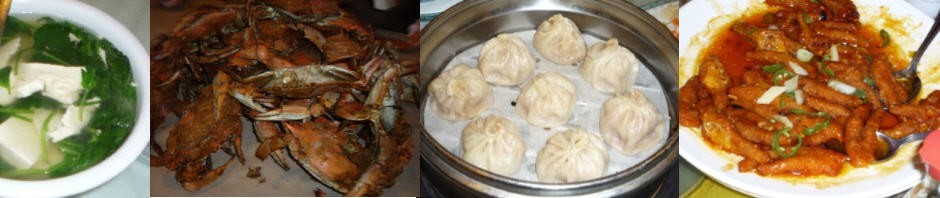
The quality of dining here is high and rising. Unlike in Hong Kong or Singapore, Taiwan has plenty of farms, its own greens, and thus farm to table dining here is common. Tainan Tai Tsu Mien Seafood is one recommendation, for an affordable Michelin one-star, emphasis on seafood. Addiction Aquatic Development has superb sushi and is a first-rate hangout. At the various Night Markets, it is still possible to get an excellent meal for only a few dollars.

One can go days in Taipei and hardly see any Western tourists, so consider this a major arbitrage opportunity.

Originally posted on Marginal Revolution – click to see comments and suggestions.


Best Street Food Night Market in Taipei


Related Posts:
Posted in Bleg, Travel, Chinese, Outside DC, Taiwan, Taiwanese | Tagged , | Comments Off on Taipei notes

Dining out as cultural trade

By Joel Waldfogel, here is the abstract:

Perceptions of Anglo-American dominance in movie and music trade motivate restrictions on cultural trade. Yet, the market for another cultural good, food at restaurants, is roughly ten times larger than the markets for music and film. Using TripAdvisor data on restaurant cuisines, along with Euromonitor data on overall and fast food expenditure, this paper calculates implicit trade patterns in global cuisines for 52 destination countries. We obtain three major results. First, the pattern of cuisine trade resembles the “gravity” patterns in physically traded products. Second, after accounting gravity factors, the most popular cuisines are Italian, Japanese, Chinese, Indian, and American. Third, excluding fast food, the largest net exporters of their cuisines are the Italians and the Japanese, while the largest net importers are the US – with a 2017 deficit of over $130 billion – followed by Brazil, China, and the UK. With fast food included, the US deficit shrinks to $55 billion but remains the largest net importer along with China and, to a lesser extent, the UK and Brazil. Cuisine trade patterns appear to run starkly counter to the audiovisual patterns that have motivated concern about Anglo-American cultural dominance.

For the pointer I thank John Alcorn.

Originally posted on Marginal Revolution – click to see comments and suggestions.


Keynote: Professor Joel Waldfogel (Digitization)


Related Posts:

Posted in An Economist Gets Lunch, Economics of Dining | Tagged , , | Comments Off on Dining out as cultural trade

*The Food of Sichuan,* by Fuchsia Dunlop

The Food of Sichuan, by Fuchsia Dunlop

A new and considerably updated edition of the classic Land of Plenty. For my money, one of the best and most valuable books ever produced. Pre-order here. And here is my Conversation with Fuchsia Dunlop.

Originally posted on Marginal Revolution – click to see comments and suggestions.


Fuchsia Dunlop on Chinese Food, Culture, and Travel (full) | Conversations with Tyler


Related Posts:

Posted in Books, Chinese | Tagged , , | Comments Off on *The Food of Sichuan,* by Fuchsia Dunlop

Chengdu bleg

Your suggestions are most welcome, this short trip will follow the time in Taipei. Where in particular should I eat and what should I eat? I have been to Chengdu once before, four years ago.

Originally posted on Marginal Revolution – click to see comments and suggestions.


INSANE Chinese Street Food Tour Of Chengdu, China | CRAZY Chinese Street Foods in Sichuan, China!


Related Posts:

Posted in Bleg, Travel, China, Chinese, Outside DC | Tagged , , | Comments Off on Chengdu bleg

Jungle Bird, NYC

Jungle Bird, NYC, web site, 174 8th Avenue, New York, NY, 646-868-8422 [Google | Ylp]

That is my brother’s new restaurant in Chelsea, southeast Asian food, it has made the Approval Matrix and after three weeks is already a big hit. Billed as a cocktail bar, but the food is truly excellent, and this is not just familial favoritism. Get the dumplings, the turmeric chicken salad (actually a perfectly musty, stinky Malaysian dish — a highlight), and the betel leaves when they have them. Jungle Bird serves some of the best southeast Asian food in Manhattan, and yet the chef grew up in New Jersey, fancy that.

Originally posted on Marginal Revolution – click to see comments and suggestions.

Related Posts:

Posted in Asian (Pan-Asian), Bars, Cocktails, New York, Outside DC | Tagged , , , | Comments Off on Jungle Bird, NYC

Uncle Liu’s Hot Pot

Uncle Liu’s Hot Pot, web site, 2972 Gallows Road, Merrifield, VA, 703-560-6868 (Metro Trip Planner – opens in new window) [Google | TripAdvisor | Tyson’s Reporter | Ylp]

This is not your Uncle’s Uncle Liu’s! New ownership, mostly a new menu, invigorated once again. They still do have hot pot, but the charms here are the mixed dishes from the Uighurs and central coastal China, the menu is a real hodge podge. The Sichuan stuff is pretty good, but not the magic here. Get the Chinese menu and look for the lead page listing the four special dishes, many with noodles, the Xinjiang lamb with thick noodle dish being my favorite. This is a hard restaurant to summarize, it is somewhat uneven and I suspect the menu has hidden treasures I have yet to discover. At the very least, it is real Chinese food and definitely worth the visit.

Related Posts:

Posted in Chinese, Hot Pot, Merrifield / Mosaic, Virginia | Tagged , , , , , , , | Comments Off on Uncle Liu’s Hot Pot

What is the optimal tax rate on restaurants?

bhauth asks me:

What do you think the optimal tax rate on restaurants would be? The current rates seem high to me:

1) The marginal substitution rate between restaurants and cooking at home is high.

2) Cooking at home uses untaxed labor. Cooking in restaurants uses taxed labor, and then customers pay sales taxes on that taxed labor. Those sales taxes are often *higher* than normal sales taxes, because food from restaurants is a “luxury good”.

Putting aside general fiscal considerations (e.g., to which other taxes are we comparing it?), I see a few main questions here:

a. Yes, eating in restaurants contributes to weight gain, but how much is that a self-control problem vs. an internalized decision of cost vs. benefit?

b. How much do cheap restaurants encourage families to have more children, a social positive in my view?

c. How much do cheap restaurants take away the bonding that arises from the family dinner table experience? And how often is that bonding a net negative with lots of fights and screaming?

d. Will taxing restaurant meals — as opposed to specific taxes on meat — on net lower beef-eating and carbon/methane problems?

e. Do restaurant food suppliers treat farm animals better or worse than do suppliers of home-cooked meals?

I say a-e are mostly hard to measure, so this gives us a common problem in economics: you have one clear, and significant, effect, and a bunch of hard to measure effects which are hard to assign a net value to. Should you be willing to recommend policy on the basis of the one effect you can clearly see, and then widen the confidence bands? Or should you just keep your mouth shut altogether?

What if your audience finds a blog post like this one too complicated or too annoying?

Originally posted on Marginal Revolution – click to see comments and suggestions.

Related Posts:

Posted in Economics of Dining | Tagged | Comments Off on What is the optimal tax rate on restaurants?

Inegalitarian restaurants


Or maybe you’re a senior staffer for Steve Scalise, the second-ranking Republican in the House. The aide usually pings his usual server for one of his usual perches: table 10 in the main dining room. It’s the corner booth with a privacy curtain—the “rock-star table,” ever since Bono sat there. Only tonight he’d prefer a booth in the bar area. Trouble is it’s packed.

Not to worry. “A maître d’ always has a table in his back pocket,” [Michael] Arnaud says. He adds the Hill staffer to the reservation system, and a bar booth with a reserved placard is his.

For these diners and the other VIPs on the books this evening—a congressman from Kentucky, a former media exec, a concierge from the W Hotel, a smattering of cherished regulars—the restaurant is extra-accommodating. Its maître d’s spot their special customers instantly, greet them by name, and immediately whisk them to their tables. Good cop, good cop…

First, the hierarchy. Because this is Washington, many restaurants naturally have a pecking order for their top clientele. All VIPs of Le Diplomate, the French brasserie in Logan Circle, are dubbed “PPX”—personnes particulièrement extraordinaires—and tracked in real time on a kitchen whiteboard as they dine. But some, such as a neighborhood regular, are classified as “TTA,” for Try to Accommodate. Others are “MA,” for Must Accommodate, including Jill Biden; Gérard Araud, the outgoing French ambassador; and Jim Abdo, the developer who basically rebuilt 14th Street. An MA commands a table, stat.

At Rare Steakhouse in downtown DC, former managing director Justin Abad categorized semiregular VIPs as “soigné,” French for “handled with care,” and those who came in three to five times a week or held multiple functions at the restaurant throughout the year as “super soigné.” The lower tier would often be treated to a complimentary Prosecco, while those handled with extra care—select media figures and lawyers, for instance—might be given a free shellfish platter on occasion.

Here is much more by Jessica Sidman. Have you ever wondered why at some places, and no I do not mean the old El Bulli, it is so hard to get a table at 7 p.m. on a Saturday night no matter when you try asking? Those tables are being rationed by status, or if you are a very regular (and lucrative) customer of some kind.

And yet almost everyone still seems to think that restaurants are super-cool, correctly or not.

Originally posted on Marginal Revolution – click to see comments and suggestions.

Related Posts:

Posted in Beautiful Women, Economics of Dining | Tagged , , , | 1 Comment