Hookah, but lots of Lebanese food too, including all the classics and also a variety of sandwiches. Consistently good, this is one of the best in the area for Middle Eastern. It has maybe my favorite hummus around. You also have the very best views of Baileys Crossroads when you look out the window. I didn’t expect much when I walked in here, as it looks like neither a “nice restaurant” nor the right kind of “mom and pop,” but I can give this place quite a good recommendation.
The premise of this book is that cooking — defined broadly enough to take in the whole spectrum of techniques people have devised for transforming the raw stuff of nature into nutritious and appealing things for us to eat and rink — is one of the most interesting and worthwhile things we do.
This is a highly thoughtful book, and I enjoyed the lengthy discussion of fermentation and fermented foods. My favorite puzzle posed is the question of why fermented foods are so frequently matters of acquired taste across cultures. Yet overall the book is missing a sharpness of argumentation or novelty of perspective which I look for in works of this kind. You can order the book here. Here is a useful Laura Miller review of the book. Here is a NYT review. Here is Mark Bittman coverage. Here is an excerpt from the book.
When author Anita Stewart first heard about the Canadian government’s new food truck parked in Mexico City, she laughed so hard she cried. The new Canada-branded, taxpayer-funded venture, which kicked off its three-week pilot project last week, is serving up a Mexican-ized version of poutine, using Oaxaca cheese instead of curds. Also on the menu are Alberta beef tourtière, and maple-glazed Albacore tuna.
The truck is trying to draw attention to Canadian products such as McCain French fries, and promote the ‘Canada Brand’ in Mexico.
Here is more, via @RGrier88. By the way, I enjoyed this paragraph:
“Some of our initial research in Mexico to support the Canada Brand found that only 35% of Mexicans were able to associate Canada to a particular food product, with fish and maple syrup being the most cited,” Patrick Girard, a spokesperson for Agriculture Canada, wrote in an email Wednesday to the Post.
That said, whenever I travel to Canada, I feel I am entering quite a distinct food culture (city by city), it simply is a little hard to define upfront.
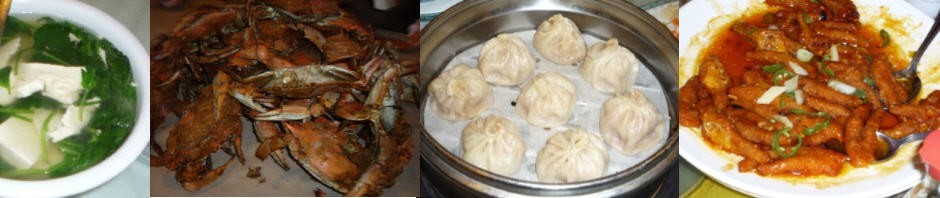
Real Beijing street food. Mostly kabobs (with Chinese spices) and dumplings, though the cold dishes are good too. I count 38 different forms of dumpling, including lamb, chicken, mushroom, bean curd and cabbage, and many other options in various combinations and manifestations. Their “Tofu Prime Products” are excellent too. These are the best dumplings around and this place should immediately be considered essential dining. It has no close substitute in this area and in terms of quality and price it is excellent.
Via Jacob A. Geller, the evidence is now in and it seems to suggest no, food deserts are not a real problem:
Here is more, and here is the study itself. If you look at the statistical tables, they’re pretty striking. Even where there is statistical significance — which is the exception to the rule — the size of the effect is so tiny, it’s like practically nothing. For example, on the margin, adding one full-service supermarket within a one-mile radius of your house is associated with an average BMI decrease in your neighborhood of .115. That is a difference of just one pound. (See back-of-the-envelope calculations here.)
So there is really no relationship, according to this one recent study of nearly 100,000 Californians, between the distance between your body and a full-service supermarket (or any other kind of food store), and whether or not you are obese. Distance, which is a proxy for access (the idea of a food desert is that the nearest supermarket, which has fresh produce, is distant), is for all practical purposes a non-factor.
Here is a good example:
For example, when you last ordered food at McDonald’s, did you even notice those ten salads on the menu? Did you order them? No, and me neither. And did you ask for a cup of water, which is free, instead of a soda? No again. (That’s my experience anyway, and that of millions of other Americans.)
And an excellent parallel:
And what’s interesting from a political standpoint, is that this analysis similarly applies to drugs — tackling the supply side does little for heroin addicts, for example, increases the price of heroin, which induces supply to come back into line with the addicts’ inelastic demand curve — and yet most liberals would probably agree with me that drug addiction ought to be tackled on the demand side (spending money to convince young people not to shoot up heroin for example, instead of spending money on patrolling the border), but the same liberals who agree with this analysis of the drug war will often turn around and favor unproven supply-side solutions to obesity like subsidizing supermarkets in low-income neighborhoods, despite the absence of evidence to support those ideas. Note that libertarians are more consistent on those issues — they oppose supply-side interventions in most, if not all, illicit drug markets, and also oppose supply-side interventions into food markets.
Run by a Turk, with an oddly yuppie feel, extremely noisy, but still some of the very best Mexican food in Virginia. The chile relleno is the real thing. High standards of quality. Recommended, especially if you get there early. It tastes truly fresh, though the prices are not so cheap. Currently they seem to be opening at 4:30 and not taking reservations, we’ll see if that policy persists.
A new Bangladeshi place, now up and running — sort of — and suddenly one of my very favorite area restaurants. During their first few months they served only biryanis, and those were a clear first best in the area. Now they have an entire menu. The thing to do is go with four people and ask for all of their best dishes. You should get around eight courses for about $30 per head. The breads, curries, and odds and ends are all first-rate and original at that. It reminds me of the early days of Thai X-Ing. It is also one of the two or three cheapest places on this whole list.
Highly recommended, right now this is one of the places to frequent. Note they only have a few tables, and the kitchen is slow in any case.
Excellent Afghan, this place earns a regular spot in my repertoire. The Afghan take on fesenjan (walnut and pomegranate sauce) is tasty and hard to get elsewhere. Good Aushak. Truly delicious Dulme (pepper stuffed with ground beef, rice around it, and on top yogurt sauce). All the dishes here seem to be at least good, note however it is slightly more expensive than many other Afghan places around the area, a main dish can run $18 for instance. There is also a kabob place downstairs (Kabob Tavern, Zabihah), cheaper and more mom and pop in feel, run by the same owners.
The name of the place says it all. I had good catfish there, good fries, good rice and red beans. I didn’t have time to try the signature dish of boiled crawfish, as spicy as you want them. The place does not offer you a fork but expects you to eat everything with your hands, a sign of civilizational advance I would say. Currently I would rate this place as the Cajun leader of the area. It looks distressingly corporate, and the food is too salty, but still it is good. Worth a try.
When you are done walk down two doors to the left to One More Page Books, excellent, and hardly known, most evenings they close at 8 so maybe start with the bookstore first.